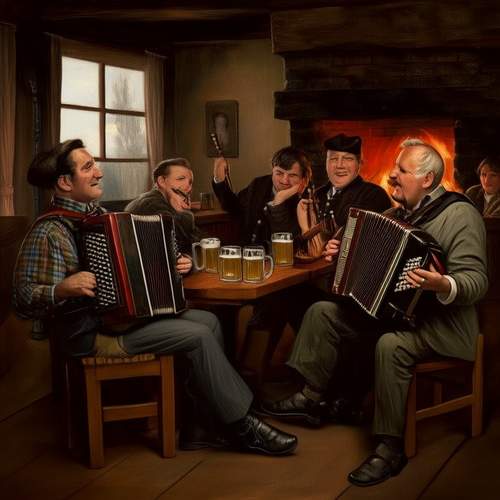
The Irish session, known as the seisiún in Gaelic, represents one of the most authentic expressions of traditional Irish music culture. Unlike formal concerts or staged performances, these gatherings thrive on spontaneity, community participation, and the raw energy of shared musical heritage. Typically held in pubs, living rooms, or community centers, sessions blur the line between performer and audience, creating a space where music lives and breathes organically.
At the heart of every session lies the unwritten etiquette that governs its flow. Musicians, whether seasoned or novice, join in when they feel the rhythm, often without verbal communication. A nod, a lifted eyebrow, or the subtle tapping of a foot signals the next tune. Repertoire ranges from centuries-old jigs and reels to locally composed pieces passed down through generations. The bodhrán (frame drum), fiddle, tin whistle, and uilleann pipes frequently dominate, but surprises—like an accordionist launching into a Balkan melody—are celebrated.
The pub session remains the most iconic setting, where the clinking of glasses and murmur of conversation weave into the music’s fabric. Places like O’Donoghue’s in Dublin or Crane Bar in Galway have become pilgrimage sites for enthusiasts. Here, the wooden floors seem to vibrate with history; it’s said the walls themselves hum along after decades of tunes. Yet what makes these gatherings magical isn’t just the music—it’s the democracy of it. A teenager with a fiddle might take the lead beside a gray-haired banjo player, both equally respected.
Seasonality plays a curious role in session culture. Winter months often draw smaller, tighter circles of musicians, their playing introspective and intricate like the knotwork in Celtic art. Summer, by contrast, explodes with open-air sessions where tourists and locals collide. Festivals like Willie Clancy Week or Fleadh Cheoil transform entire towns into temporary hubs where impromptu sessions spill onto sidewalks. The music adapts to its container—sometimes mournful, other times raucous—but always alive.
Technology has carved its own niche within this tradition. Younger musicians now use apps like The Session to share tune databases or coordinate meetups. Yet screens are conspicuously absent during play; the focus remains on eye contact and the collective breath between phrases. Recordings of legendary sessions circulate online, but as any purist will argue, the true essence evaporates when removed from the sticky-floor immediacy of the live experience.
Behind the merriment lies a quiet urgency to preserve this cultural artifact. As globalization homogenizes musical expression, sessions serve as living archives. Regional styles—like the Sliabh Luachra slides of County Kerry or the driving Donegal fiddle technique—are safeguarded one tune at a time. Scholars note how these gatherings embody oral transmission at its purest: melodies learned by ear, imperfections cherished as part of a tune’s journey through time.
The session’s future hinges on a delicate balance. While commercial venues sometimes stage "show sessions" for tourists, purists argue this drains the tradition’s soul. Meanwhile, grassroots efforts—like community workshops or school programs—nurture new generations of players. The magic endures when a hush falls over the room as someone starts a slow air, or when a dozen instruments suddenly lock into a reel’s momentum. In these moments, the Irish session proves itself not merely entertainment, but a centuries-old conversation still unfolding.
By /May 30, 2025

By /May 30, 2025
By /May 30, 2025

By /May 30, 2025

By /May 30, 2025
By /May 30, 2025
By /May 30, 2025
By /May 30, 2025
By /May 30, 2025
By /May 30, 2025

By /May 30, 2025
By /May 30, 2025
By /May 30, 2025
By /May 30, 2025
By /May 30, 2025
By /May 30, 2025
By /May 30, 2025
By /May 30, 2025
By /May 30, 2025
By /May 30, 2025