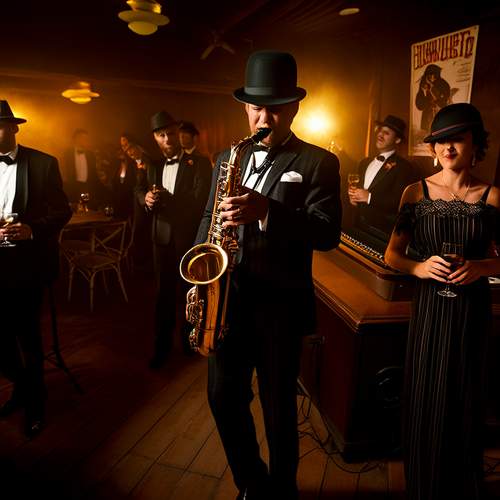
The smoky haze of speakeasies, the clandestine clink of glasses, and the rebellious wail of trumpets—these are the sensory imprints of an era when jazz and prohibition collided in America. The 1920s weren't just about banned liquor; they were about the birth of a cultural revolution where jazz became the soundtrack of defiance. This was a time when the underground thrived, and music became the lifeblood of a generation refusing to be silenced.
Prohibition, enacted in 1920 with the Volstead Act, was meant to sober up the nation. Instead, it drove drinking into hidden basements and backrooms, where jazz musicians found a home. The music, already brimming with improvisation and freedom, became synonymous with the illicit thrill of the times. Clubs like Chicago’s Lincoln Gardens and New York’s Cotton Club became sanctuaries where the rules of the outside world didn’t apply. Here, the music was raw, unfiltered, and alive—much like the bootlegged whiskey being passed under tables.
Jazz was more than entertainment; it was a middle finger to authority. The syncopated rhythms and daring solos mirrored the chaos of the era. Musicians like Louis Armstrong and Jelly Roll Morton didn’t just play notes—they told stories of struggle and rebellion. Their music was a language understood by everyone from the wealthy socialite slumming it in Harlem to the working-class immigrant looking for escape. In a time when the government sought control, jazz was the sound of freedom.
The relationship between jazz and prohibition wasn’t just cultural; it was economic. Bootleggers and club owners needed attractions to draw crowds, and jazz bands were the perfect lure. Gangsters like Al Capone saw the value in funding music venues, knowing that where there was jazz, there would be thirsty patrons. This unlikely alliance between crime and creativity fueled the spread of the genre, pushing it from the margins to the mainstream. By the time prohibition ended in 1933, jazz had cemented its place in American culture.
Yet, the legacy of this era isn’t just in the music—it’s in the attitude. The prohibition years taught jazz musicians how to thrive in adversity, a lesson that would echo through the civil rights movement and beyond. The speakeasies may be gone, but the spirit of those underground clubs lives on every time a musician takes the stage and plays something unexpected. Jazz, born in the shadows of prohibition, remains a testament to the power of art in the face of repression.
Today, when we listen to the recordings of that era, we’re not just hearing music—we’re hearing history. The crackle of old vinyl carries the whispers of secret passwords, the laughter of flappers, and the defiant blare of a trumpet cutting through the night. Prohibition tried to control America, but in doing so, it unleashed something far more intoxicating: a sound that would define a century.

By /May 30, 2025

By /May 30, 2025
By /May 30, 2025

By /May 30, 2025

By /May 30, 2025
By /May 30, 2025
By /May 30, 2025
By /May 30, 2025
By /May 30, 2025
By /May 30, 2025
By /May 30, 2025

By /May 30, 2025

By /May 30, 2025
By /May 30, 2025

By /May 30, 2025

By /May 30, 2025
By /May 30, 2025
By /May 30, 2025

By /May 30, 2025
By /May 30, 2025